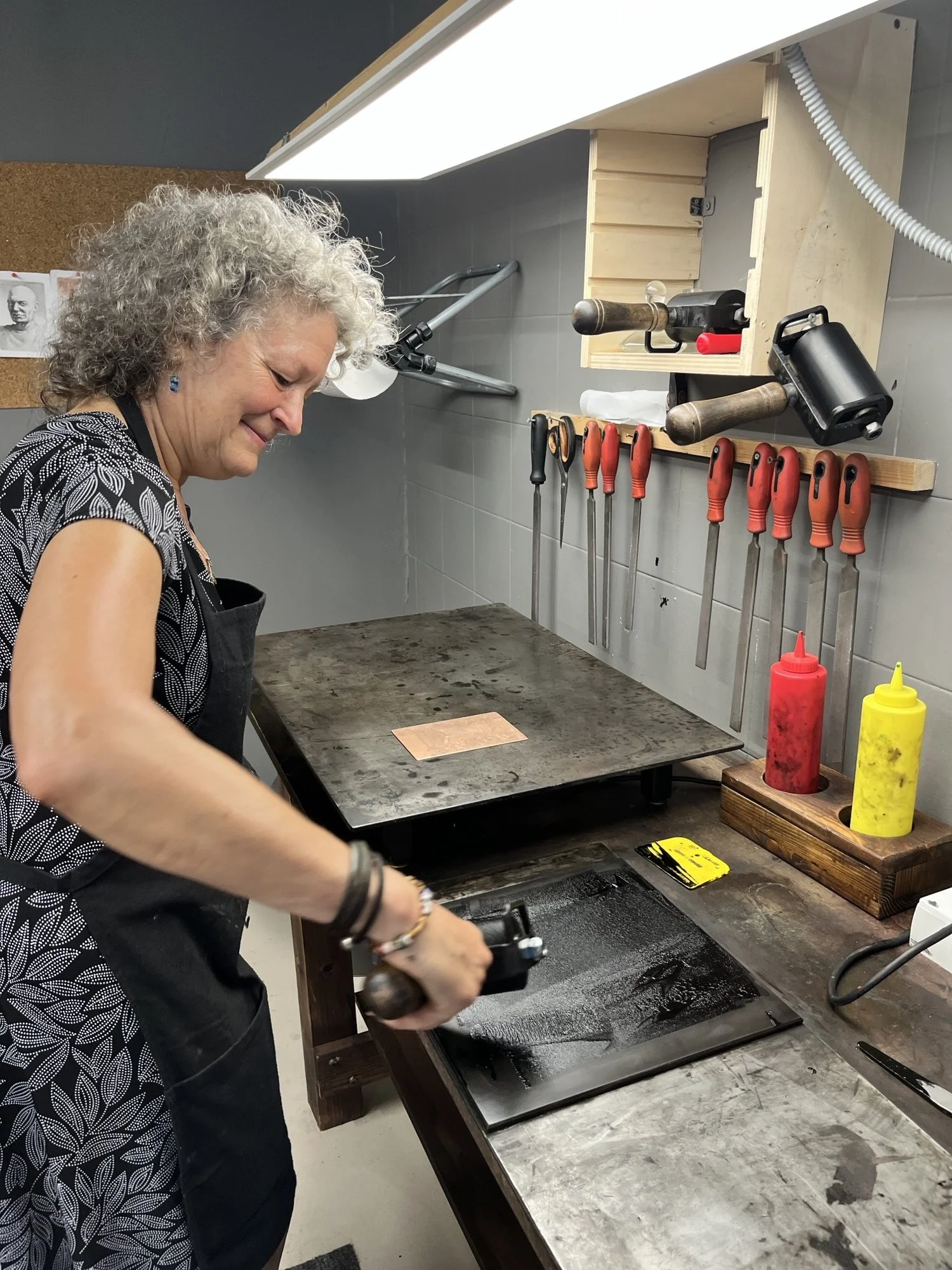
Inking my copper plate as part of running off an edition of my etching, ‘Venezia memories’!
Art Abroad?
When an opportunity presented itself for me to study etching in Florence, the birthplace of the Renaissance, I could not resist. It is a city filled with beauty and art and people embracing life, whether drinking spritzes, eating gelato, or dancing in the streets at midnight. I first fell in love with Florence on a solo trip to Italy in 2019; one that motivated me to apply to the Ottawa School of Art (OSA)’s Fine Arts Diploma program that same year!
Following graduation in 2022, I decided to return to travel but with a specific purpose. I knew I wished to strengthen my technical skills to enhance my emerging art practice and wanted the opportunity to do so whilst being fully immersed in another culture. Fellow artists recommended I look at the art schools in Florence and that is when I discovered the Florence Academy of Art (FAA).
In 2023, I spend the month of July studying Figurative Drawing at the FAA with instructor Simone Moritz. and found the experience so rewarding, I returned in 2024! My enchantment with the city, its treasures, and being part of the FAA are captured in my blog, ‘Artistic Adventures in Firenze.’ What it does not mention is my delight when at the end of my 2024 workshop, the FAA held its official opening of a new state of the art etching workshop!
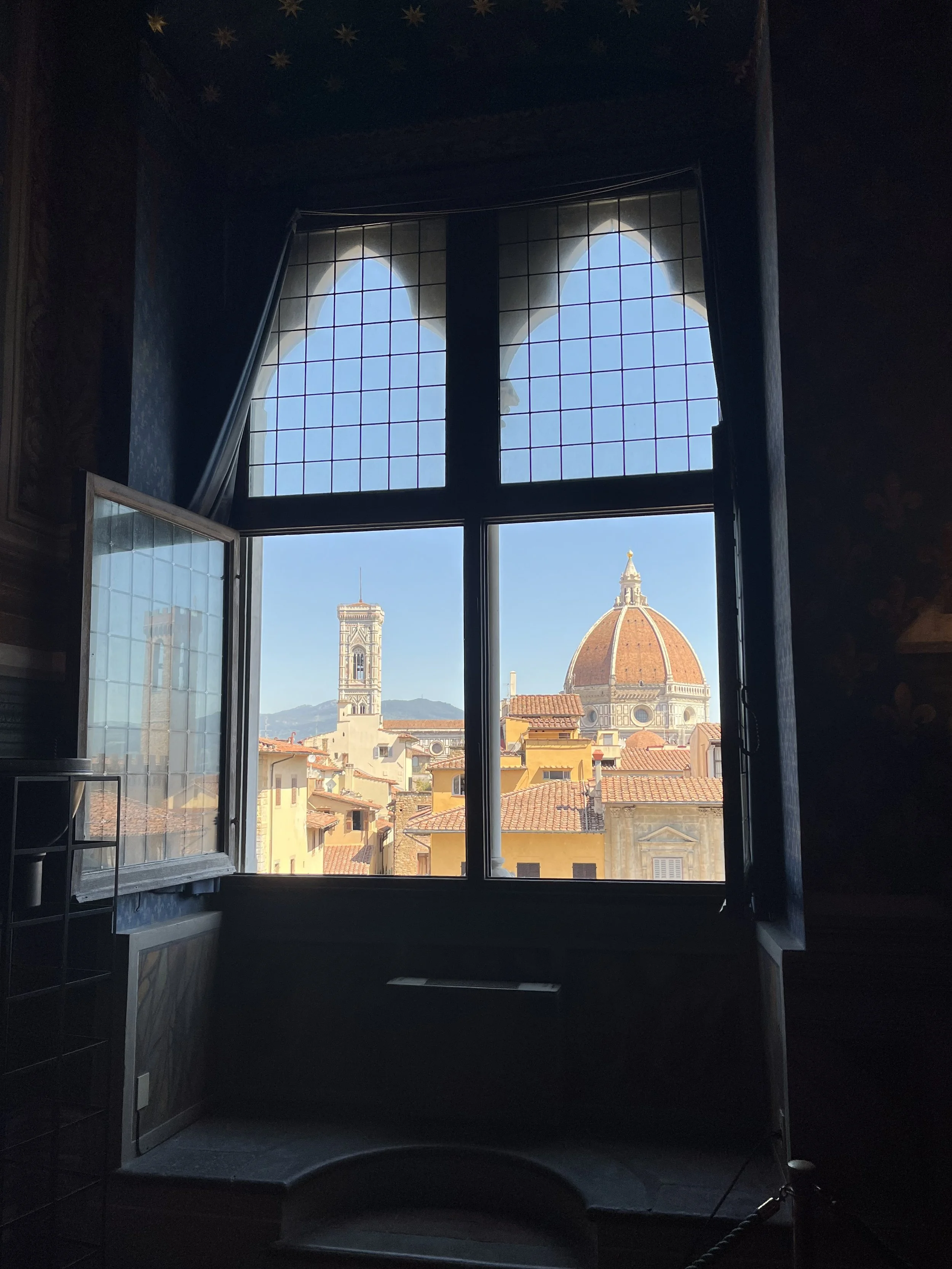
View of the dome of the infamous Duomo Cathedral seen from Palzzo Vecchio, Florence, Italy
When the ‘Etching: Masters of Line’ July workshops were announced for 2026, I immediately signed up and hoped my art sales would cover my course fees! They did, thankfully! And I began my search for an apartment and the necessary supplies. Please see my accompanying photos and read my blog below to learn more about the FAA, the studio’s opening, some of the instructors, and my personal learnings from the course itself.
Why the Florence Academy of Art?
The Florence Academy of Art (FAA) defines its mission as:
To provide the highest level of instruction in classical methods of drawing, painting and sculpture for students wishing to pursue careers as professional artists in the Realist tradition
When I first walked into the FAA, I felt like I had travelled back in time to an atelier, or series of ateliers of the old masters producing sculptures, écorché sculptures, figure drawings, figure paintings, portraits and still life paintings. The FAA boasts an international faculty of renowned artists, many who have studios on-site, and attracts students from around the globe. In my workshops, I learned to observe, to master tools, techniques and materials, along with art history. The FAA provides rigorous training even within its summer workshops.
What FAA also offers is the building of community. Exceptional graduate students, from its full-time programs, will be invited to assist in classes. The FAA Collective enables FAA alumni, the majority who are continuing to pursue an artistic life, to remain connected. The FAA Café offers drinks and meals on-site and a courtyard in which to get to know fellow students. FAA faculty will provide tours to visitors and students of their studios. Fellow students, as I can attest, become life-long friends.
In the summer, workshop students have the delight of attending a Welcome Party. It takes place in the beautiful gardens of the Budini Gattai Palace. The Academy provides small plates, gelato, wine, bubbles, a few speeches and encourages everyone to get to know each other and to meet the faculty members and staff. In 2026, I believe over 40 nationalities were represented at this party among the few hundred students in attendance.
The FAA ensures workshop students have one visit to a museum with an art historian during their stay. In 2026, the etching students toured the Uffizi after meeting the guide at the David statute situated outside the Palazzo Vecchio. In earlier years, I had the privilege of touring the Bargello museum which holds works by Donatello and Michealangelo among other masters in their collection.
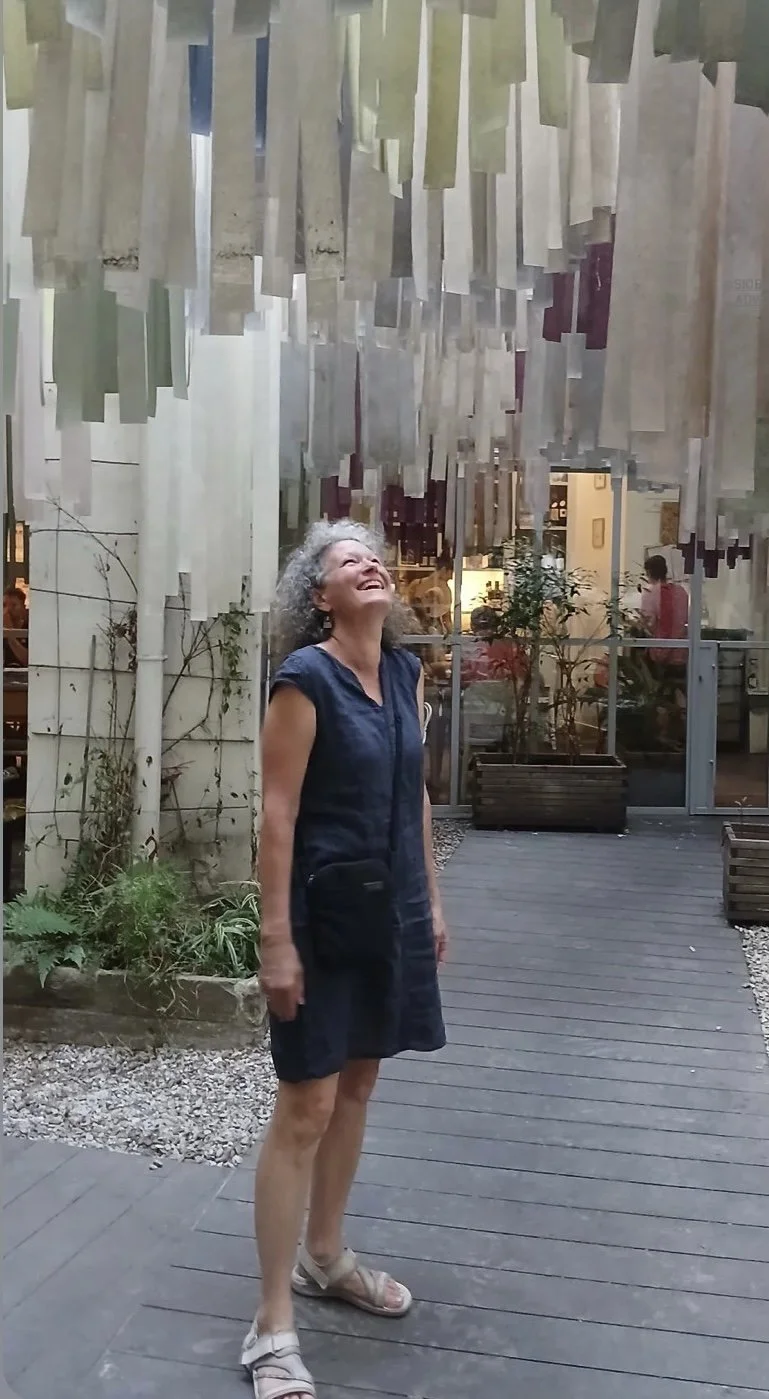
Florence often evokes this reaction! Gazing up happily. In this case, captured by friend Laura Clark on our last night in the city after finishing the Figurative Drawing course in 2024.
Other events include the FAA faculty exhibit and a concert; the latter, usually by a touring quartet in Italy for a competition. I found it an immense privilege to be part of these events during my short stays within an already captivating city.
Celebrating the Opening of the FAA Etching Studio
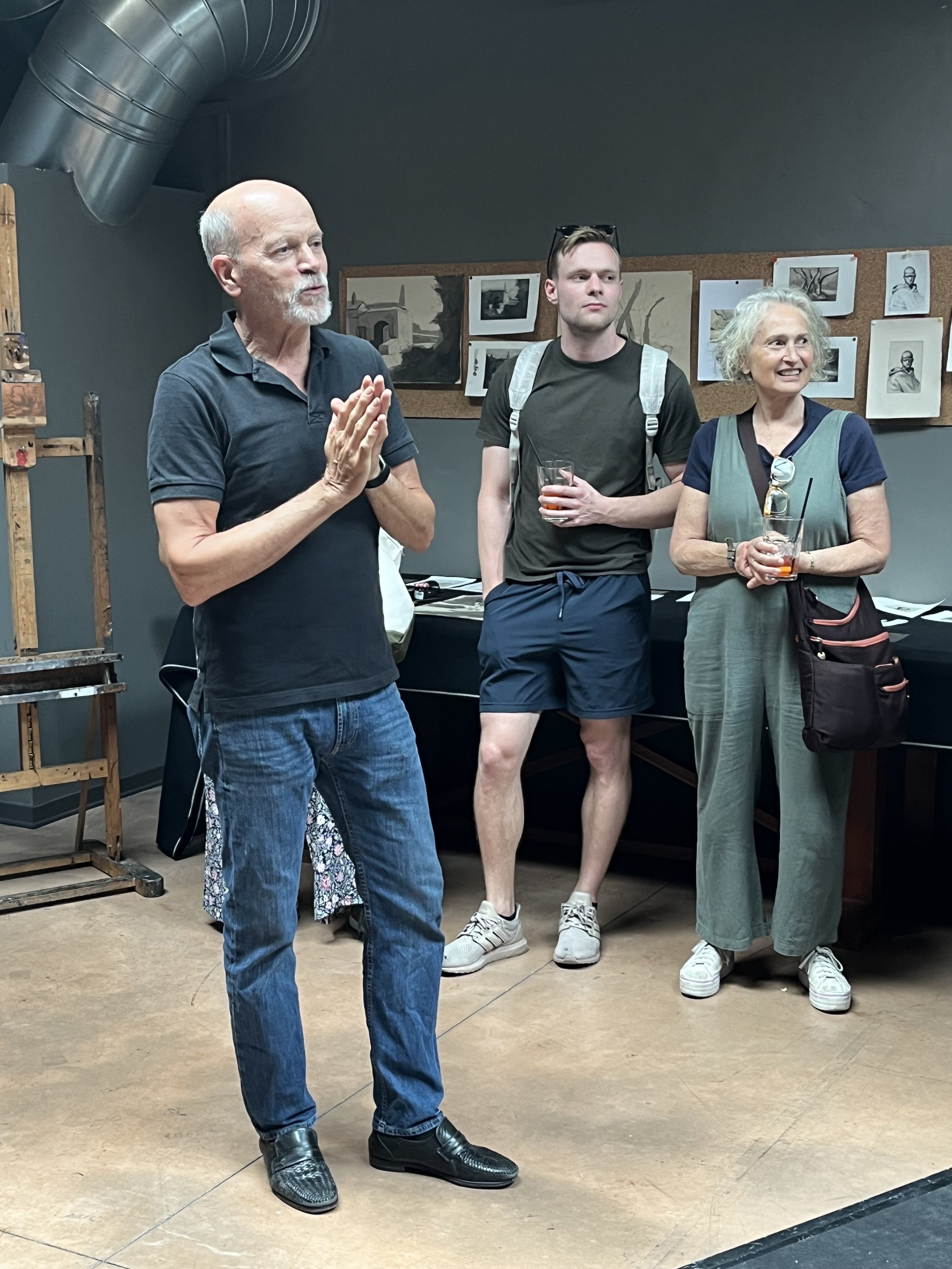
FAA Founder and Master Printer Daniel Graves speaking at the 2024 Opening of the Etching Studio
In 2024, Daniel Graves, the founder of the Florence Academy of Art (1991), established an Etching studio within the Academy’s main campus with four state-of-the-art etching presses as its centrepiece. Imagine my delight in being able to attend the studio’s July opening in person and capture photos of the event!
Daniel, renowned painter, is also an accomplished master etcher. That evening he introduced FAA instructors, staff, and students to the world of etching. Then, Matteo Taverna, Director of Etching, provided a hands-on demonstration of the printing a copper plate etching using one of the studio’s elegant Bendini etching presses. The latter are made in Bologna, Italy.
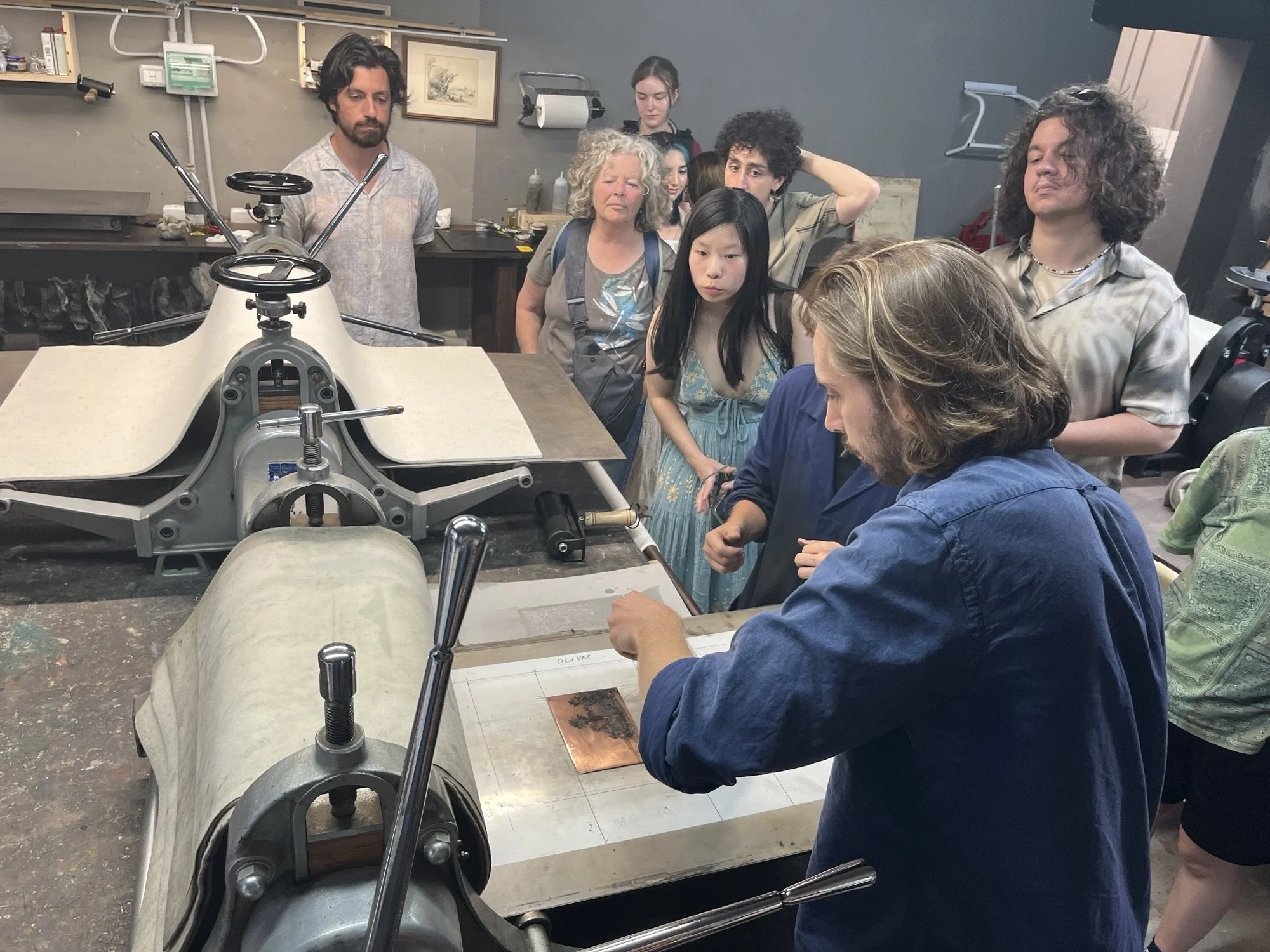
Principal Instructor Matteo Taverna demonstrating how to print an etched copper plate during the studio opening
Etching: the Masters of Line FAA Workshop
My dream of printing on one of the Bendini etching presses finally came true in July 2026 when I participated in the FAA’s month-long workshop ‘Etching: the Masters of Line.’ The workshop was led by Principal Instructor Matteo Taverna with dedicated support from Teaching Assistant and Figurative artist Katerina Christou.
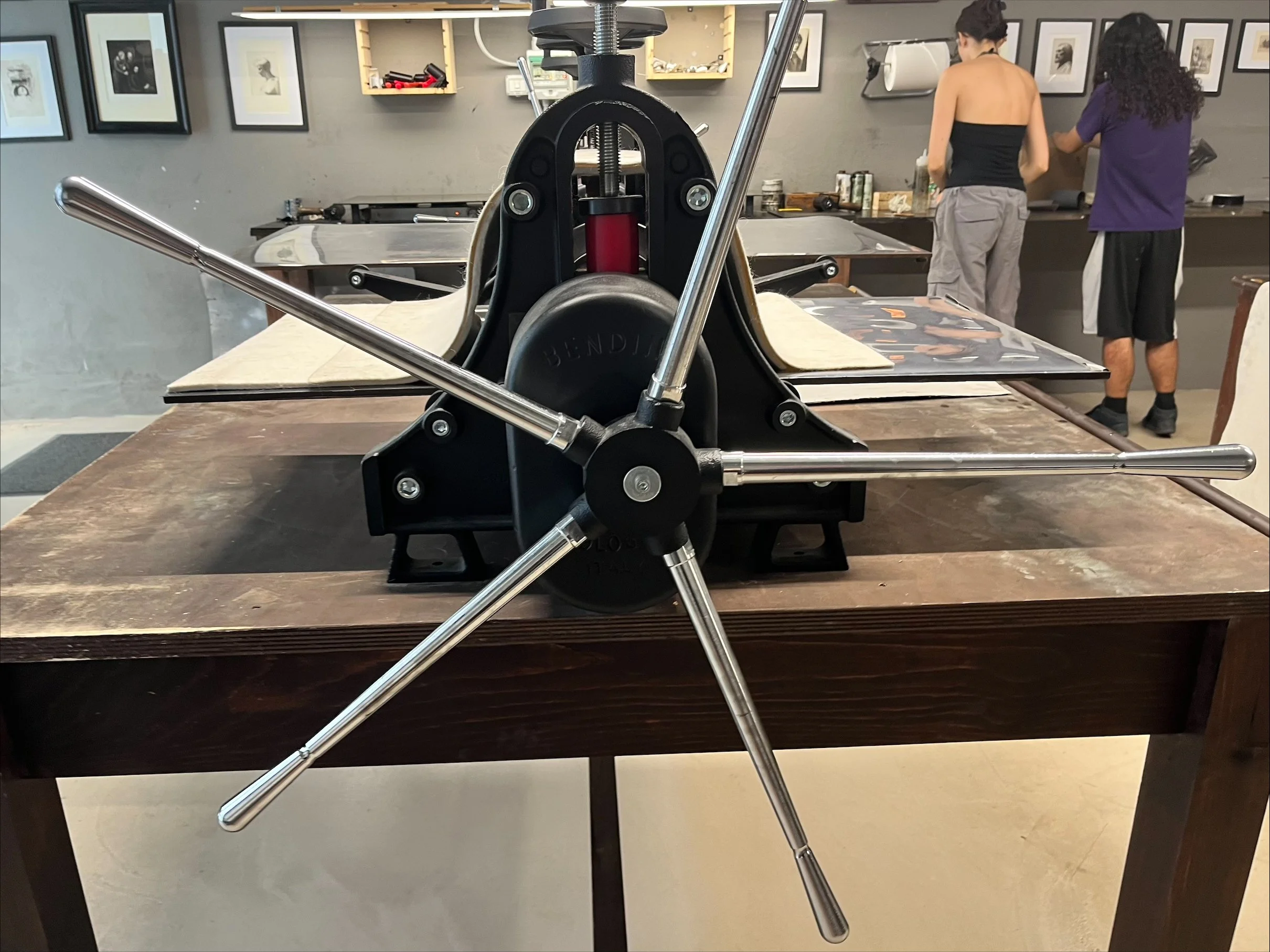
View within the FAA Etching Studio
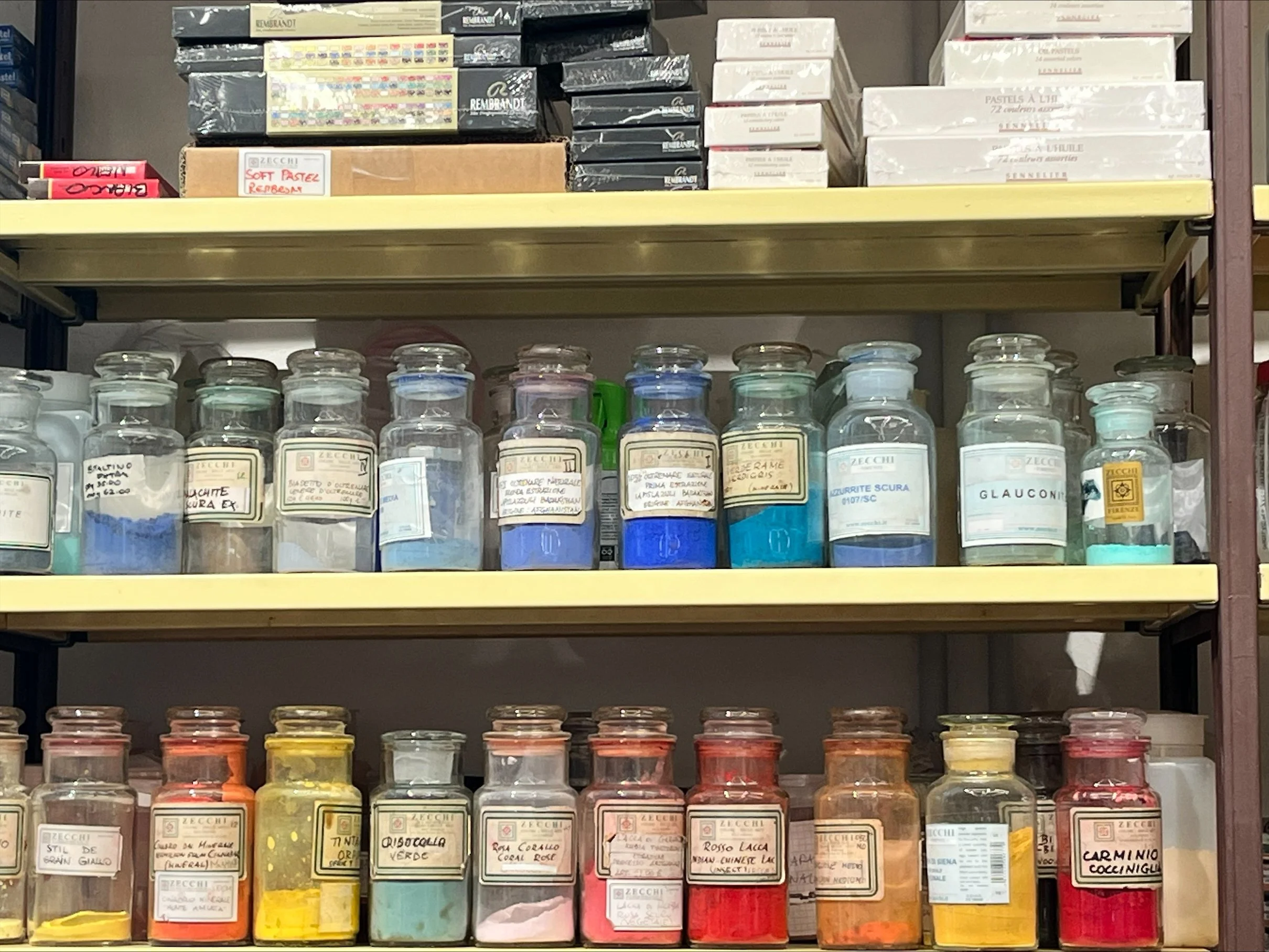
An iconic image of jars of pigments from the Zecchi art store
Prior to the Workshop beginning, we did have to purchase tools and supplies including, for example, copper plates, etching needles, hard ground, burnishers, tarlatan, proofing and good quality paper from Zecchi. This place is magical, filled from floor to ceiling, with raw pigments, paint brushes, and all the art supplies one could desire. It is located near the Duomo and housed in Florence’s original university building, dated 1348!
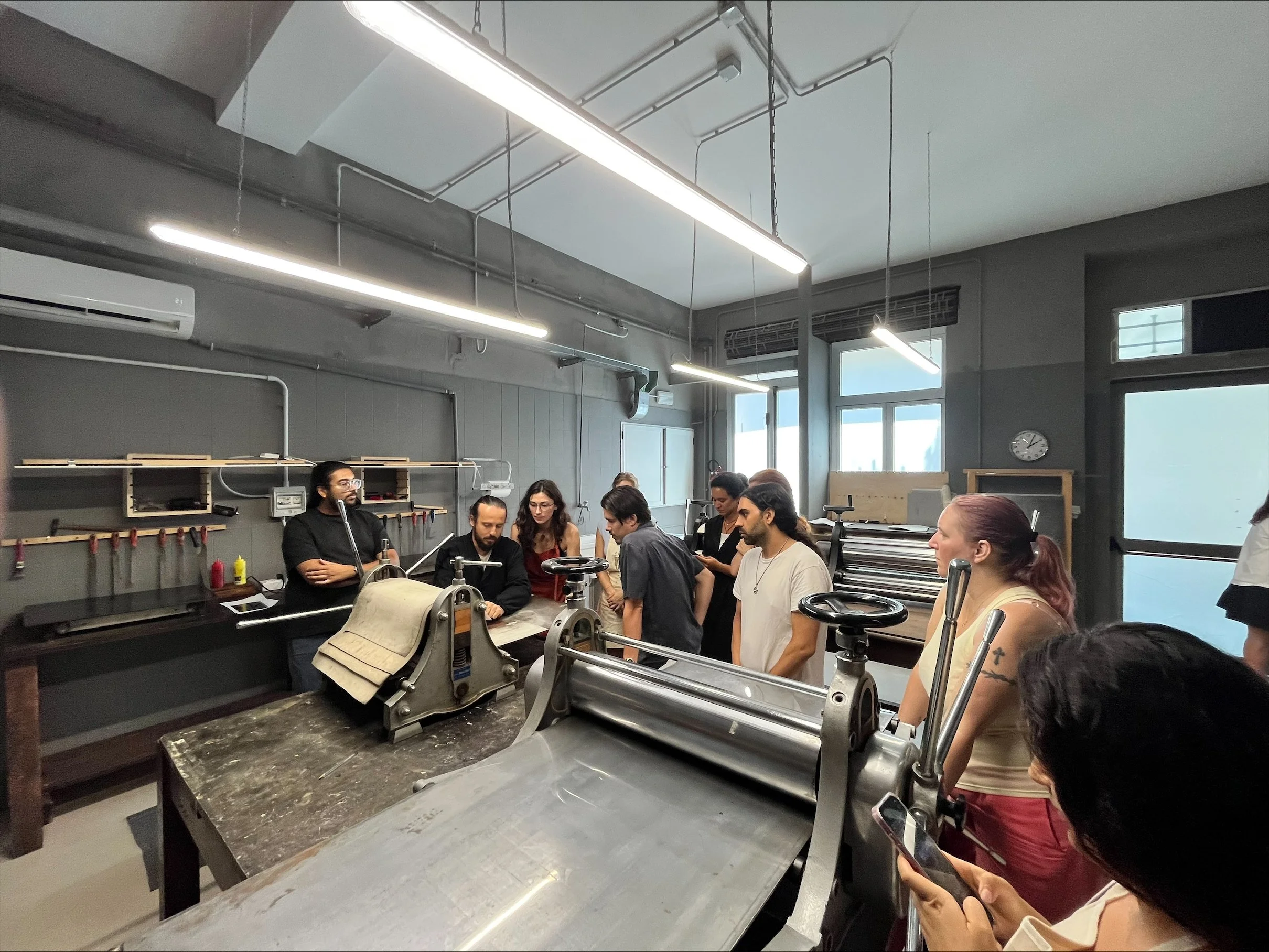
Matteo Taverna showing students how to pull a quality print on one of the beautiful presses
The FAA has a dedicated set of rooms dedicated to etching including the main studio. There is a lecture and figure drawing studio, a working area with desks and storage lockers, a room with etch baths and sinks (i.e. and health and safety station), and the main etching studio (i.e., with presses, hot plates, drying racks, baths for soaking paper and supplies).
The Masters of Line Workshop focuses on teaching the theory and practice of creating copper plate etchings. Over the month, we were given art history and technical lectures and opportunities to both draw a figure from life and to etch on a plate in plein air (i.e., drawing directly on a plate prepared with hard ground). We were taught about Master Etchers and given resources to study. We received lectures on the key steps and approaches to developing a line etching, as well, as hands-on demonstrations, and individual critiques of our works-in-progress. We were in the studio each day from 9 am until 4 pm at a minimum. Although we did break for lunch, expressos, and occasionally gelato from a nearby gelateria on especially hot days!
The instruction was thorough and we learned a great deal including how to approach the creative process in a methodical, disciplined manner and to be rigorous when critiquing and refining our etchings.
In terms of process, my accompanying photos and text are designed to give you a visual illustration of the key steps we used and the tools and materials we used during the Workshop. For those who may be interested in understanding this process more, I provide more detail on the steps I recall below. Please note that this is not fully comprehensive and any errors are the fault of my memory and not of the FAA teaching!
Preparing, Designing and Etching a Copper Plate for a Line Etching:
Filing the edges and corners of a copper plate with a long metal file at a forty-five-degree angle
Using sandpaper wrapped around the metal file to smooth the filed edges
Backing the plate with heat-resistant chimney tape
Cleaning the front of the plate with mineral spirits and then lightly rubbing it with alcohol
Warming the plate and applying hard ground on it with a small, clean, dust-free roller
Smoking the plate (i.e. using the smoke from lit taper candles)
Transferring an image onto the ground and smoked plate (e.g. using white carbon paper)
Planning an approach to drawing and etching the image (note: this will vary depending upon whether you are working from light to dark or the reverse but essentially it was to determine the lengths of time you will dip the plate in an etch bath to create tonal variety)
Drawing with a variety of etching needles on the ground plate (note: thin for light lines and thicker for darker lines)
Placing the prepared copper plate in the non-toxic ‘Edinburgh Etch’ (i.e., mix of ferric chloride, citric acid and water) for the desired time
Adding stop-out varnish to lines to remain light (note: this will vary depending upon which approach you are using)
Working the plate with an etching needle and re-etching
Cleaning the ground off the plate and test printing it to view the image in its current state
Revising your etch plan and approach
Repeating the grounding, drawing and etching process (note: as needed)
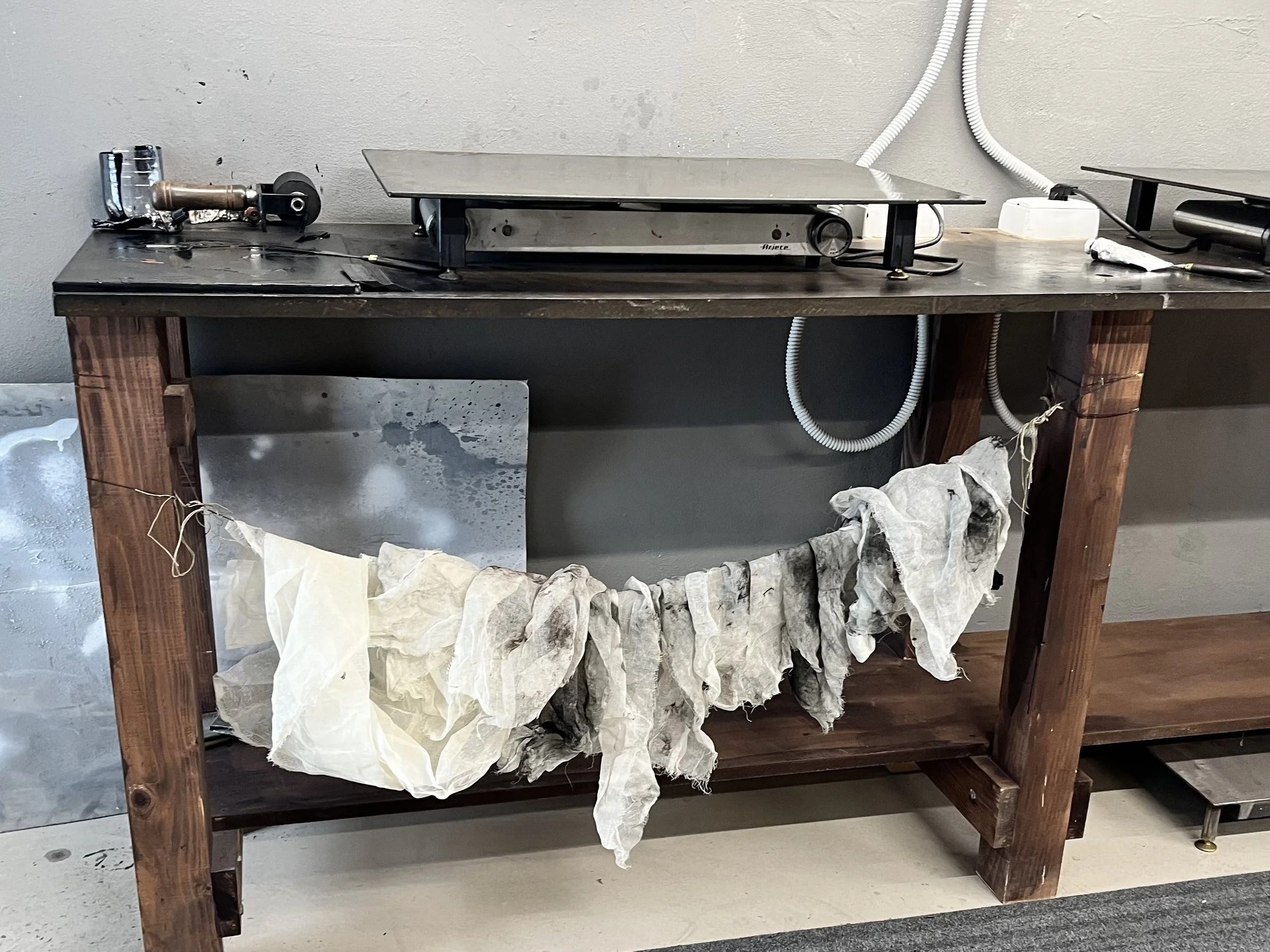
End of Day in the Etching Studio: hot plate used for inking turned off and tarlatan (used for wiping ink) drying
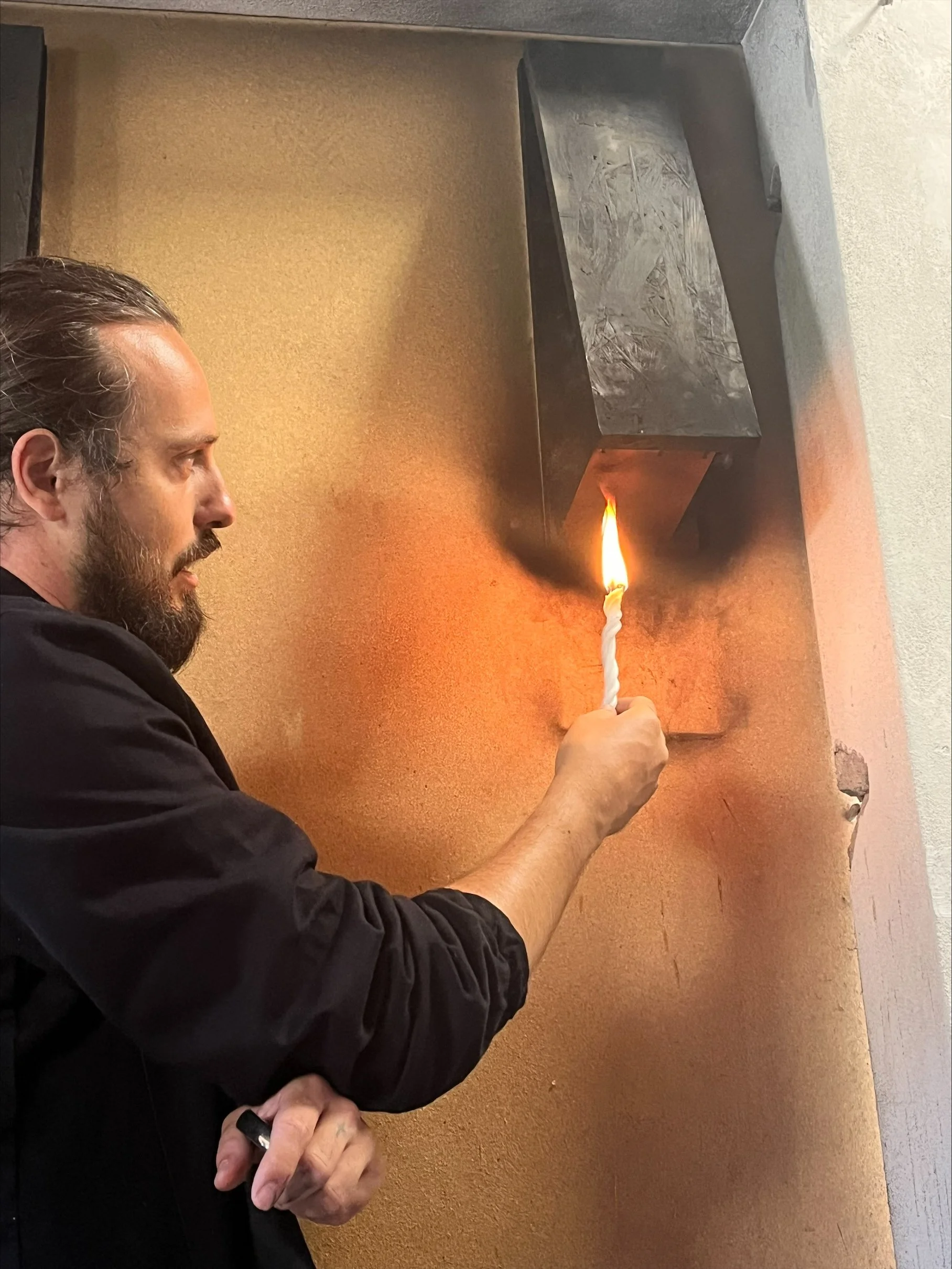
Matteo smoking a copper plate covered in ground before transferring an image to the plate
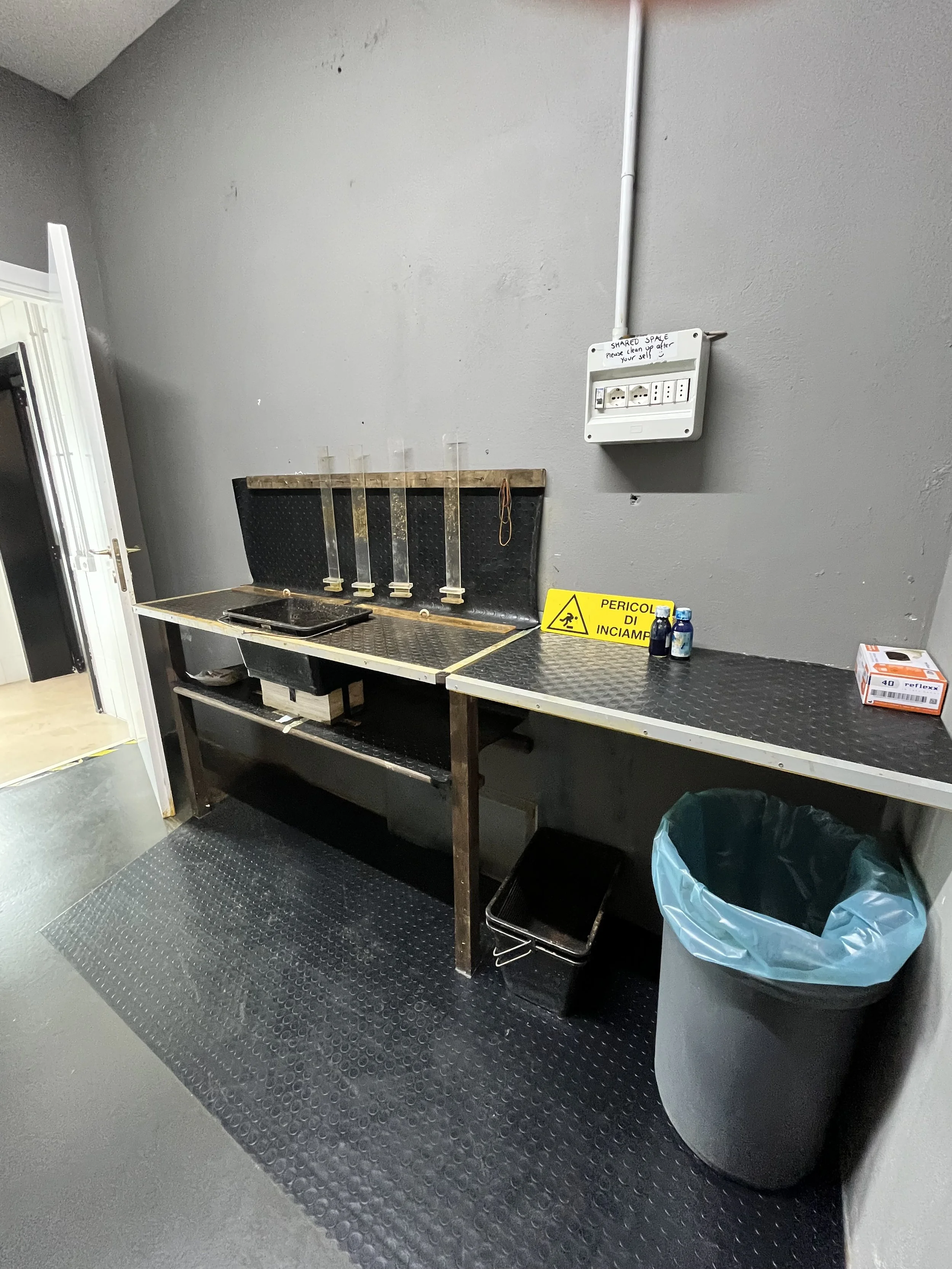
This is where we used the Edinburgh etch to etch our plates. It is in the vertical containers seen at the back of this table. The basin in front contains water to dunk the etched plate in to stop the etch.
The printing process itself included:
Cleaning the copper plate of ground
Warming up the copper plate on a hot plate and rolling it with ink (we used Charbonnel etching ink)
Removing the ink from the top of the plate (not the lines themselves) with a rubber squeegee
Rubbing the plate in a circular motion with a ‘flat ball’ of tarlatan
Wiping the plate edges with a piece of fabric (e.g., old sock)
Warming up the plate briefly one last time
Placing the plate on top of a registration guide sitting on the press bed
Placing piece of wet, but blotted (i.e. with a large roller) printmaking paper laid on top of the inked plate
Lowering the press blankets over the plate and rolling it through the etching press
In addition, we learned how to cut plates; trim, soak and blot paper; use aquatint (i.e. enamel spray to create tone); use sandpaper or a scraper to get rid of unwanted scratches; use a tungsten point for dry point marks; a stone polisher (note: high polish, shows white of paper better); a burnisher (to remove unwanted lines); and how to prepare paper for proofing (i.e. stacking wet and dry in plastic overnight); and how to edition and inventory a series of prints professionally.
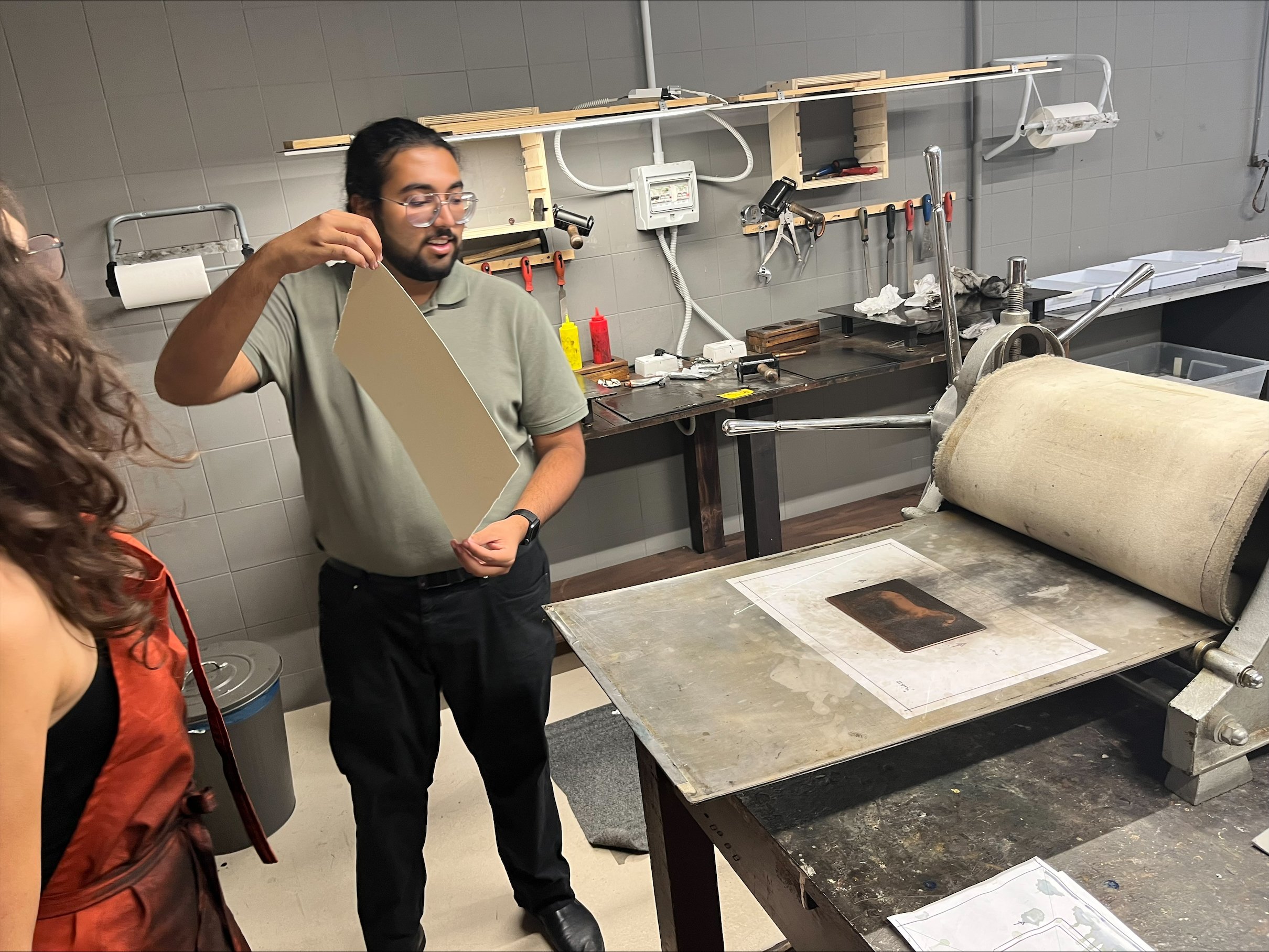
My new friends Astrid and Kabir working together to print an edition of her beautiful horse etching
During the ‘Etching: Masters of Line’ workshop, I found it took practice and patience to understand all of the steps in the aforementioned process; the approaches and tools one could use to create shade and tone on an etching plate (e.g., degree of multi-directional cross-hatching before a ‘false bite’ or the unintentional widening of a line); and, how long to leave a plate in the etch depending upon the degree of shade and tone I desired. In the end, I created four finished (see photos), two partly finished etching plates, and ran off a small edition of my ‘Venezia Memories’ etching on good quality paper. The remainder I editioned once back in the Ottawa School of Art studio. This fall, I plan to introduce my printmaking students to the basic steps of line etching using copper plates.
In conclusion, I would highly recommend any artist take time out of their practice, if possible, to learn a new, or refine, an existing technical skill. Studying etching full time every day for a month, certainly enabled me to progress much faster than I would have done otherwise and produce artworks I feel comfortable exhibiting.
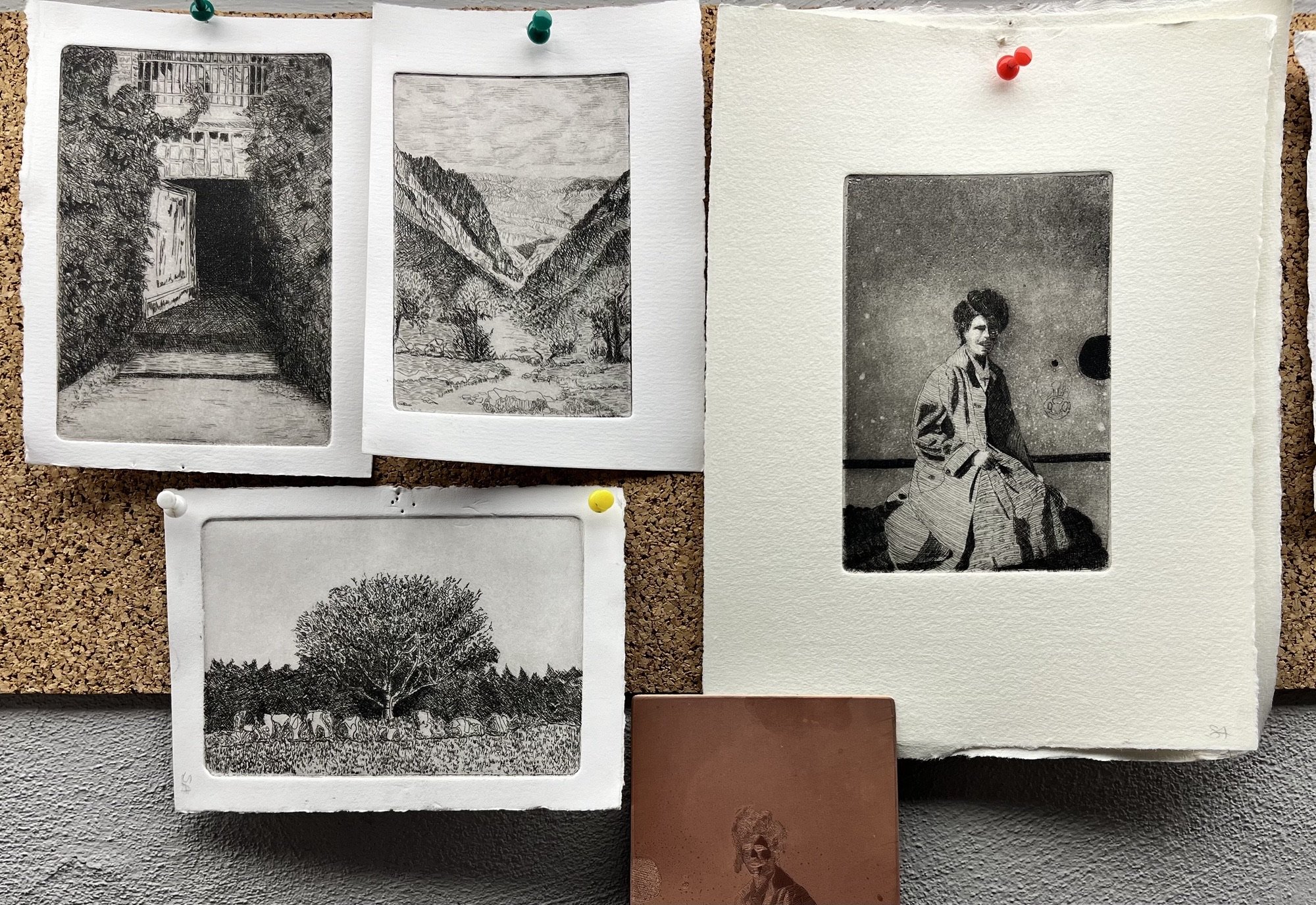
My etchings in various states of proofing including ‘Venezia memories,’ ‘Lares Trek, Peru,’ ‘Across the Ocean,’ and ‘Neolithic Stone Circle, Aviemore.’